

Verified 22 August 2026.
Short answer. “No riding” is no longer the test — almost every Chiang Mai sanctuary now says it, so it separates nothing. The 2026 question is how much you touch the elephants at all. Elephant Nature Park publishes half days at ฿2,500 and runs hands-off programmes; Elephant Jungle Sanctuary publishes half days from ฿1,900 and includes bathing.
Every sanctuary within an hour of Chiang Mai now advertises itself as ethical, and the word has been worn smooth. This page does something narrower and more useful: it sets out what each place publishes about itself, the one distinction that still separates them in 2026, and how to check a claim yourself before you pay a deposit. Prices below were read from each sanctuary’s own site on 22 August 2026.
What does “ethical” actually mean in 2026?
Ten years ago the dividing line was riding, and it was a real line. It has largely done its work: the major Chiang Mai operations have dropped saddles, and Elephant Nature Park describes having “stopped offering elephant riding” in favour of what it calls a Saddle Off model. When every brochure says the same thing, the claim stops carrying information.
The live disagreement now is about contact — whether a good visit involves feeding, bathing and mud spas, or whether the elephants are better left alone while you watch.
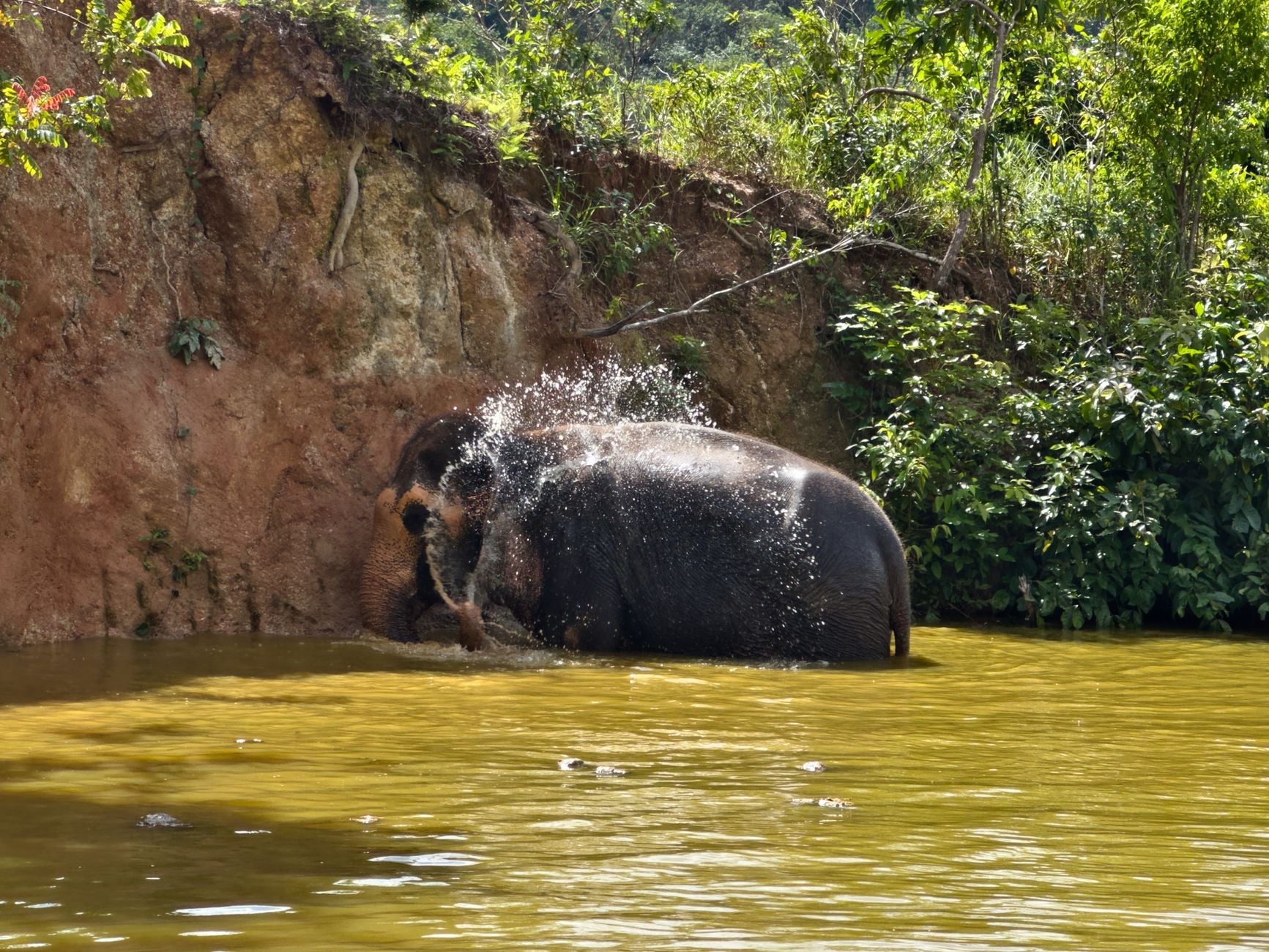
Neither of these is fraud, and we are not going to pretend the sector has settled it. The argument for hands-off is that bathing sessions run on the visitor’s schedule rather than the animal’s, and that repeated close contact keeps an elephant working. The argument for hands-on is that it funds the sanctuary and builds the attachment that makes people care. What matters for you is that the two experiences are genuinely different, and the marketing word “ethical” is attached to both. Decide which one you actually want before you compare prices.
How do you check a sanctuary’s claims yourself?
You are booking from another country, from photographs. Four checks you can do in ten minutes, in order of how much they tell you.
- Read the programme description, not the About page. Every About page says rescue and sanctuary. The programme description says what you will physically do — and if it lists bathing, mud spas or “play with the elephants”, that is a hands-on visit whatever the header says.
- Check whether they publish a hands-off option at all. A sanctuary that offers an observation-only programme alongside its contact programmes has thought about the question. One that only sells contact has answered it a different way.
- Look for the price of doing less. Where the cheaper ticket is the one with more elephant handling, the handling is the product. Where the observation programme costs the same or more, it is not being treated as the budget option.
- Ask directly, in writing, before you pay. “Is there riding at any point? Is bathing optional? How many visitors per elephant per day?” A place that answers plainly is telling you something; a place that answers in adjectives is telling you something too.
What does a Chiang Mai elephant sanctuary visit cost?
These are the figures the two largest operations publish on their own booking pages, read on 22 August 2026.
| Programme | Length | Published price |
|---|---|---|
| Elephant Nature Park — child 3–11 at 50%, baby 0–2 at 25% on most programmes | ||
| Half Day, morning or afternoon | Half day | ฿2,500 |
| Karen Elephant Serenity | Single day | ฿2,500 |
| SkyWalk | Full day | ฿3,500 |
| Sunshine for Elephants | Single day | ฿3,500 |
| Walking with Elephants (no children) | Single day | ฿3,500 |
| Elephant Highlands | Single day | ฿6,000 |
| Care for Elephants (no children) | Single day | ฿6,000 |
| Overnight | 2 days, 1 night | ฿5,800 |
| Journey to Freedom (16+) | 4 days / 7 days | ฿10,000 / ฿15,000 |
| Elephant Jungle Sanctuary, Chiang Mai — “from” prices; no separate child rate published | ||
| Feed, Craft & Chill at the cafe | 1 hour | from ฿690 |
| Half Day Experience (includes bathing) | 6 hours | from ฿1,900 |
| Watch Me Experience | 6 hours | from ฿1,900 |
| One Day Elephant Care | 9 hours | from ฿2,800 |
| Overnight Experience | 2 days | from ฿5,900 |
| Volunteer Programme | 3 days, 2 nights | from ฿7,900 |
Half day or full day?
Both operations sell both, and the honest guidance is not “longer is better”.
- Travelling with young children — half day. Elephant Jungle Sanctuary’s half day runs 6 hours and its full day 9 hours, and the difference is mostly more of the same in more heat.
- You want to understand the place rather than photograph it — full day, or an overnight. The longer programmes are where the feeding routine, the vet work and the herd behaviour become visible.
- Flying out the same evening — half day, and a morning one. See the timing section below; a 9-hour programme plus transfers is not a departure-day activity.
- You are uneasy about contact but still want to go — look specifically for the observation programmes. Both operations publish one, and at Elephant Jungle Sanctuary the observation option is priced the same as the bathing one, not cheaper.
- You only have a spare hour and a budget — the cafe visit, honestly. It is a cafe with elephants nearby, not a sanctuary day, and it is priced like one.
Where do your bags go on a sanctuary day?
This is where a sanctuary trip goes wrong logistically, and it is the part we can answer from our own counter rather than from research.
Sanctuary programmes start with an early hotel pickup and end with a late-afternoon return. On a departure day — checked out in the morning, flying that night — that leaves your luggage with nowhere to be for nine or ten hours, and no sanctuary is going to mind a suitcase for you.

We run a counter inside Chiang Mai International Airport, 1st Floor, open daily 06:00 to 24:00. That window is wider than any sanctuary programme, including the 9-hour ones, so the bags can go in before the pickup and come out on the way to the gate. Storage at the Chiang Mai Airport counter is ฿150 per piece per 24 hours, every booking is insured up to ฿50,000, and bags are tagged and photo-logged at drop-off (rate as published on the branch page, checked August 2026).
Address and current rates are on the Chiang Mai Airport branch page.
What else do people ask before booking?
Which is the best elephant sanctuary in Chiang Mai?
It depends on whether you want to touch the elephants. Elephant Nature Park is the larger and better-known operation and runs an explicitly hands-off programme where visitors observe rather than handle. Elephant Jungle Sanctuary is cheaper and its headline half day includes bathing and mud spa activities. Both publish no-riding positions. Decide which kind of visit you want first, because that distinction separates them far more than any ranking does.
How much does an elephant sanctuary in Chiang Mai cost?
Between about 1,900 and 6,000 THB for a day, depending on the operation and the programme. Elephant Nature Park publishes half days at 2,500 THB and single-day programmes from 2,500 up to 6,000 THB, with children aged 3-11 at half price. Elephant Jungle Sanctuary publishes half days from 1,900 THB and a 9-hour day from 2,800 THB, with no separate child rate published. All figures read from each sanctuary’s own booking pages on 22 August 2026.
Do any Chiang Mai elephant sanctuaries still offer riding?
The major operations publish no-riding positions, and Elephant Nature Park describes having stopped offering elephant riding in favour of a Saddle Off model. Because nearly everyone now says it, the claim no longer distinguishes one place from another. Read the programme description rather than the About page, and ask in writing whether riding happens at any point before you pay a deposit.
Is bathing with elephants ethical?
The sector genuinely disagrees, and you should know that before you book. The case against is that bathing sessions run on the visitor’s timetable rather than the animal’s and keep an elephant in contact with people all day. The case for is that it funds the sanctuary and creates the attachment that makes visitors care. Elephant Nature Park runs an explicitly hands-off project; Elephant Jungle Sanctuary advertises bathing and mud spa as part of its half day. Both call themselves ethical.
Where can I leave my luggage during a Chiang Mai sanctuary day?
At our counter inside Chiang Mai International Airport, 1st Floor, open daily 06:00 to 24:00. That covers the earliest sanctuary pickup and the latest return, so bags can go in before the tour and come out on the way to your flight. Storage at the Chiang Mai Airport counter is 150 THB per piece per 24 hours and every booking is insured up to 50,000 THB. Note this is our only location in Chiang Mai – there is no city-centre counter – so if you are not passing the airport, your hotel’s left-luggage room is the more practical option.